



A fundraising report needs revisions before it can go out. The manager knows what needs to change, but explaining it will take too much time. With another deadline approaching, it feels easier to fix the report themselves and move on.
The immediate problem is solved, but the employee still does not know what to do differently next time.
For nonprofit leaders managing lean teams and competing priorities, this is a familiar tension. Developing people takes time, yet postponing that investment can keep managers caught in the same cycle.
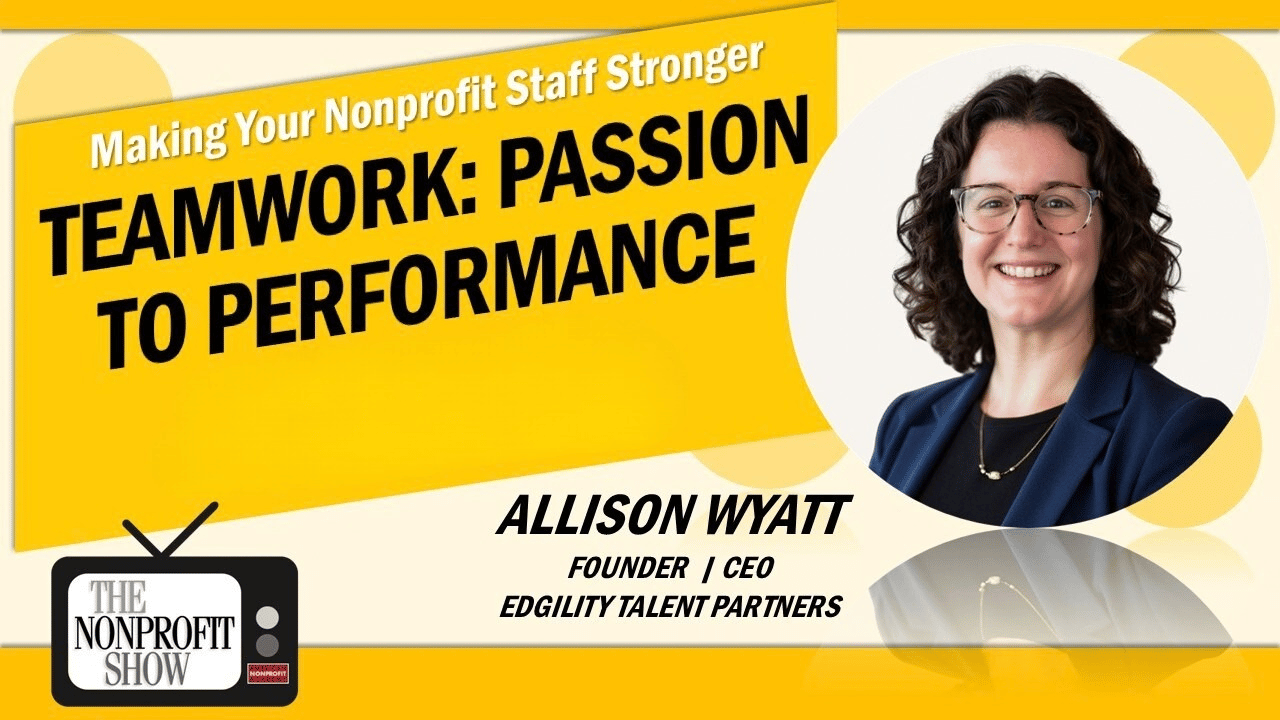
In this webinar, Allison Wyatt of Edgility Talent Partners joins Julia C. Patrick of The Nonprofit Show to explore how intentional people management can help organizations turn commitment to the mission into stronger performance, staff development, and sustainable impact.
▶️ Watch Now: Nonprofit People Management Strategy: Turn Passion Into Performance
What could your team accomplish if the support they received matched the passion they bring to your mission? Watch the full webinar here.
Why People Strategy Deserves a Place Alongside Mission Strategy
For many nonprofits, much of the budget goes toward staff. Those are the people delivering programs, building relationships, and moving the mission forward. Allison asks a straightforward question: If an organization has a fundraising strategy and a financial strategy, shouldn’t it have a strategy for supporting and developing its people, too?
That means being clear about what’s expected, giving people feedback they can use, and helping them build the skills to take on more responsibility. It also means making sure managers have the support to do those things well.
When those pieces aren’t working together, everyone feels it. Managers keep stepping in to do work their teams could own with the right guidance. Staff doesn’t know what they need to do differently. And development gets pushed aside because there’s always something more urgent.
In the conversation, Allison shares the story of an organization whose leadership transition came with serious financial consequences. It’s an example of how putting off an investment like succession planning can leave an organization vulnerable when circumstances change. It’s worth taking a step back and asking: What people challenges are being worked around today that could become bigger risks to the mission down the road?
Strong Management Helps Staff See a Path Forward
People come to nonprofit work because they care about the mission. But caring deeply about the work doesn’t mean they automatically know what success looks like or how to get there. They need clear expectations and someone who will help them grow.
Allison describes good managers as coaches. They show people what they’re working toward, give useful feedback along the way, and help them build the skills for their next challenge. That happens through ongoing conversations rather than waiting until an annual review to discuss performance.
Managers need support, too. If the organization hasn’t clarified what strong performance looks like, it’s hard for a manager to coach someone toward it. Organizations have a responsibility to make those expectations clear and help managers develop the skills to guide their teams.
In the webinar, Allison shares a simple analogy that brings this to life, showing how everyday interactions can help staff make progress or leave them guessing about how to improve.
Trust Shapes How Feedback Is Received
It can feel easier to fix someone’s work and move on, especially when time is tight. But people notice when their work has been changed. If their manager said it looked good, they’re left wondering: Why didn’t they just tell me what needed to be different? Over time, that can erode trust.
Allison talks about building relationships where people know their manager is invested in them and where it’s safe to make mistakes and learn. That trust makes it easier to have honest conversations about what’s working and what needs to improve.
In a remote environment, those relationships take more intention. Staff need to know that their manager cares about them as people and is willing to help them get better at their work.
In the full conversation, Allison shares how managers can approach feedback as a chance to work through a challenge together, with clear expectations and support for what comes next.
Consistency Is an Equity Issue
Someone’s opportunity to grow shouldn’t come down to who their manager is. But when managers are left to figure out coaching and development on their own, that’s exactly what can happen.
One employee gets regular feedback and support to take on new challenges. Another is just as capable but gets very little guidance. Over time, those differences can shape who gets ahead.
Allison explains why organizations need shared expectations and support for managers. Staff should have a fair opportunity to succeed based on their performance, with access to the guidance they need to improve.
That’s central to Edgility Talent Partners' approach: building people systems that put an organization’s values into practice. Leaders need to prioritize development, equip managers to coach their teams, and ensure those practices work together across the organization.
Watch the Webinar to Explore What Comes Next
Strengthening people management can feel like another demand on an already full calendar. Allison acknowledges that reality and discusses how leaders can begin making progress through manageable changes.
As a starting point, consider this question: What work keeps returning to a manager because an employee has not yet received the clarity or coaching needed to own it?
That question can reveal an opportunity to build capacity while supporting someone’s growth.
For practical examples, feedback guidance, and a closer look at how to make development part of organizational culture, watch the full conversation.
Watch: Nonprofit People Management Strategy: Turn Passion Into Performance





-1-2-1.png "Untitled design (20)-1-2-1")