If you lead a nonprofit, you know how much depends on the relationship between the executive director and the board, and how quickly things can start to break down when that partnership is not working. As Allison Wyatt puts it, being the head of an organization can be a very lonely job, which is exactly why a board that truly has your back makes such a difference.
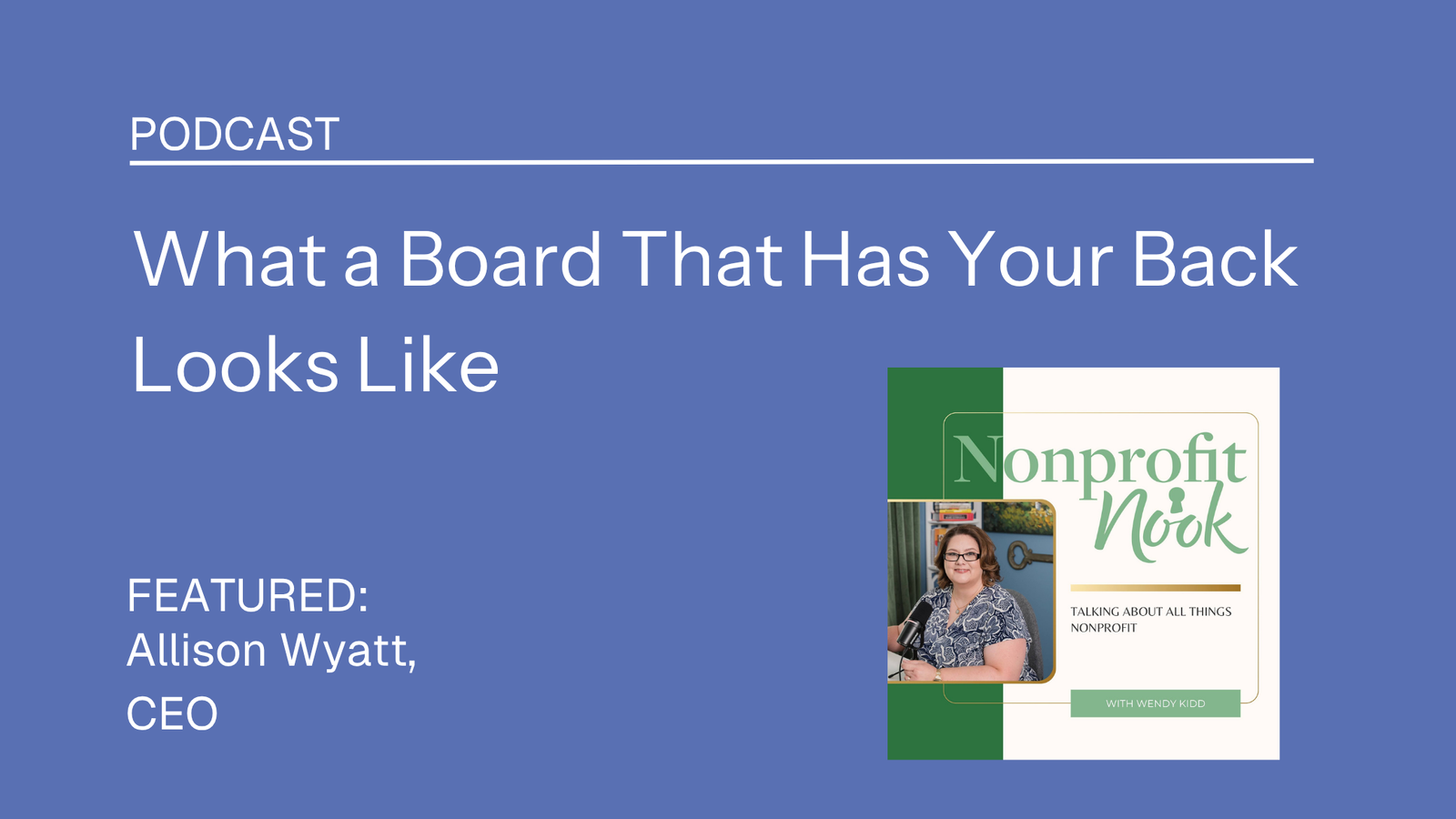
In a recent episode of The Nonprofit Nook, host Wendy Kidd sat down with Allison Wyatt, founder and CEO of Edgility Talent Partners, for an honest conversation about what it really looks like when a board has its leader's back. Allison, who has served on many boards and worked closely with many executive directors, shares what she has seen work and what she has seen gone wrong in the partnership between nonprofit leaders and their boards. Here is a preview of what they discussed, along with a few reasons we think the full episode is worth your time.
What a Healthy Board Partnership Actually Looks Like
Wendy opens the conversation by asking Allison what she sees when the relationship between an executive director and a board chair is truly working. Allison's answer centers on three qualities that sound simple, but are surprisingly easy to lose in practice: tight alignment on the vision, transparent communication that goes well beyond the formal report at each meeting, and a mutual trust in which the leader knows the board has their back and the board has real confidence in the leader. As Allison puts it, when any one of those pieces is missing, things tend to break down pretty quickly.
From there, the two dig into a question many executive directors quietly wrestle with: how to tell whether a board is genuinely supporting you or simply showing up for meetings. Allison describes the difference between board members who check the required boxes and those who roll up their sleeves, offer real thought partnership, and help the board become, in her words, "greater than the sum of its parts." If you have ever wondered which kind of board you have, this part of the episode will give you a clearer picture.
Committees as More Than a Formality
For small nonprofits with volunteer boards, committee structure can feel like one more thing to manage, and many organizations are unsure where to begin. Allison walks through the core committees she sees on effective boards and explains why one of them is often overlooked, even though it plays an important role in orienting and developing board members over time.
What makes this part of the conversation especially valuable is the way Allison reframes committees as a succession planning strategy for the board itself. By inviting volunteers into committee work before they hold a board seat, organizations can build a steady pipeline of future board members and see firsthand who follows through, which skills they bring, and how committed they are to the mission. Wendy also shares a common committee mistake she sees small organizations make, and her suggestion for fixing it is one that many listeners will want to bring to their next board meeting.
Building a Board of Your Own
Allison is candid that leading an organization can be a lonely job, which is why she encourages executive directors to build what she calls a personal resource board. This is not a governing body, but rather a small circle of people who are invested in your growth as a leader and who bring the right mix of experience, accountability, and access to support you. In the episode, she describes the specific roles she likes to see on this kind of advisory bench, and the way she frames it may change how you think about your own professional network.
The conversation then turns to a reality many nonprofit leaders face. Many were hired because they are great at the mission, not because they were formally trained to lead. Allison offers creative and affordable ways to keep building leadership skills even when there is little budget or time, and she shares a story about how Edgility Talent Partner’s compensation work evolved into a peer cohort model that helped leaders learn from one another by exposing them to many different models and helping crystallize the right choice for their own organizations.
Asking for Support Without It Sounding Like a Complaint
One of the most relatable moments in the episode comes when Wendy raises a concern that many executive directors carry but rarely say out loud: how do you ask your board for more support without it sounding like a complaint? Allison's response begins with a simple question she believes every board should be asking its leader, and it is one borrowed directly from strong performance management practices. She also offers several low-stakes ways an executive director can gently educate and nudge a board in the right direction, including one approach centered on compensation that shows how leading by example can reshape the conversation with your board.
The Conversation Most Boards Avoid
Before the episode wraps, Allison raises a topic that she says is one of the most sensitive for leaders to bring up and, at the same time, the place where she sees things go the worst when they go badly. That topic is executive succession planning. Her reminder to board members is direct and memorable: "The question isn't if the leader is going to leave, the question is when." She explains why the work of preparing a successor needs to begin years before a transition, and why waiting until it is time to hire a search firm almost always means waiting too long.
Why This Conversation Matters for Your Organization
Throughout the episode, Allison returns to the idea that a strong partnership rests on alignment, transparent communication, and trust, and that both the executive director and the board share responsibility for building it. As Wendy points out, if leaders are not setting expectations and giving board members real ways to contribute, a board can end up being the rubber stamp that no one is looking for, which is why orientation, training, and open conversations matter on both sides of the relationship.
Whether you are an executive director hoping for more support, a board chair looking to strengthen your partnership with your leader, or a board member who wants to contribute more meaningfully, this episode offers practical ideas you can act on right away, including Allison's answer to the question of what an executive director can do before the very next board meeting.
Listen to the Full Episode
This preview only scratches the surface of what Allison and Wendy cover, and the full conversation is filled with stories, examples, and practical suggestions that are best heard in their own words. You can watch or listen to "What a Board That Has Your Back Looks Like with Allison Wyatt" here, and we encourage you to share it with your board chair or fellow board members as an easy, low-pressure way to start a conversation about how your partnership is working.
If the episode sparks questions about compensation, performance management, career pathways, succession planning, or how your board can better support its leader, Edgility Talent Partners works with nonprofits across the country on each of these areas. You can explore the free eBooks, toolkits, blogs, and podcasts in the resources section of our website, or connect with Allison directly on LinkedIn, where she is very active and responds to messages.